
How Many People Can Fit in a Limousine? A Practical Capacity Guide
There is no single answer to how many people can fit in a limousine. A limousine may be a traditional luxury sedan for a small party, a luxury SUV with several rows, a stretched vehicle with perimeter seating, or a larger group vehicle such as a party bus. Its legal passenger capacity and its comfortable seating capacity can be very different.
As a general guide, sedans often suit a few passengers, luxury SUVs commonly accommodate small-to-medium groups, stretch limousines may serve larger groups, and party buses are designed for bigger parties. However, the exact limit depends on the specific make, model, interior configuration, operator rules, applicable regulations, seat-belt positions, luggage, and the kind of trip you are taking. The best choice is not always the vehicle that holds the most people; it is the one that lets everyone travel safely and comfortably.
Whether you are arranging wedding transportation, airport transportation, prom transportation, corporate transportation, or a night out, start with a realistic headcount and then confirm the exact vehicle details with the provider. For local planning, a limousine service in Queens can help clarify the vehicle category that best matches the group, route, and occasion.
Why limousine capacity varies so much
The word “limousine” describes more than one kind of vehicle. A chauffeur-driven sedan and a long stretch limousine provide very different interior space, seating arrangements, door access, and luggage space. Even two vehicles that look similar from outside can have different limo seating capacity because of how the cabin was built or modified.
Capacity is also influenced by practical and legal details. A passenger limit should be based on the actual vehicle, its approved seating positions, working seat belts, and the operator’s requirements—not an estimate based on body size or a photo. A vehicle’s stated maximum may assume every designated seat is occupied, while a comfortable passenger count leaves room for coats, formalwear, movement, and a relaxed ride.
Trip conditions matter as well. Six people may feel perfectly comfortable for a short ride to dinner but crowded on a longer airport journey with carry-ons. The same group may need extra room when wearing gowns, carrying instruments, travelling with children, or bringing event materials. Think of limousine passenger capacity as a planning decision, not simply a number on a listing.
Typical limousine capacity by vehicle type
The ranges below are general guidance, not universal promises. Specific make, model, seating layout, and passenger rules always control. When comparing options, ask the company to confirm both the maximum occupancy and the recommended number for your itinerary.
| Vehicle category | Typical use | General capacity guidance | Key planning consideration |
|---|---|---|---|
| Luxury sedan | Executive travel, couples, small airport trips | Often suited to 1–3 passengers | Usually prioritizes quiet comfort over group size |
| Luxury SUV | Families, small groups, airport and corporate travel | Often suited to roughly 4–6 passengers | Third-row room and luggage space can vary substantially |
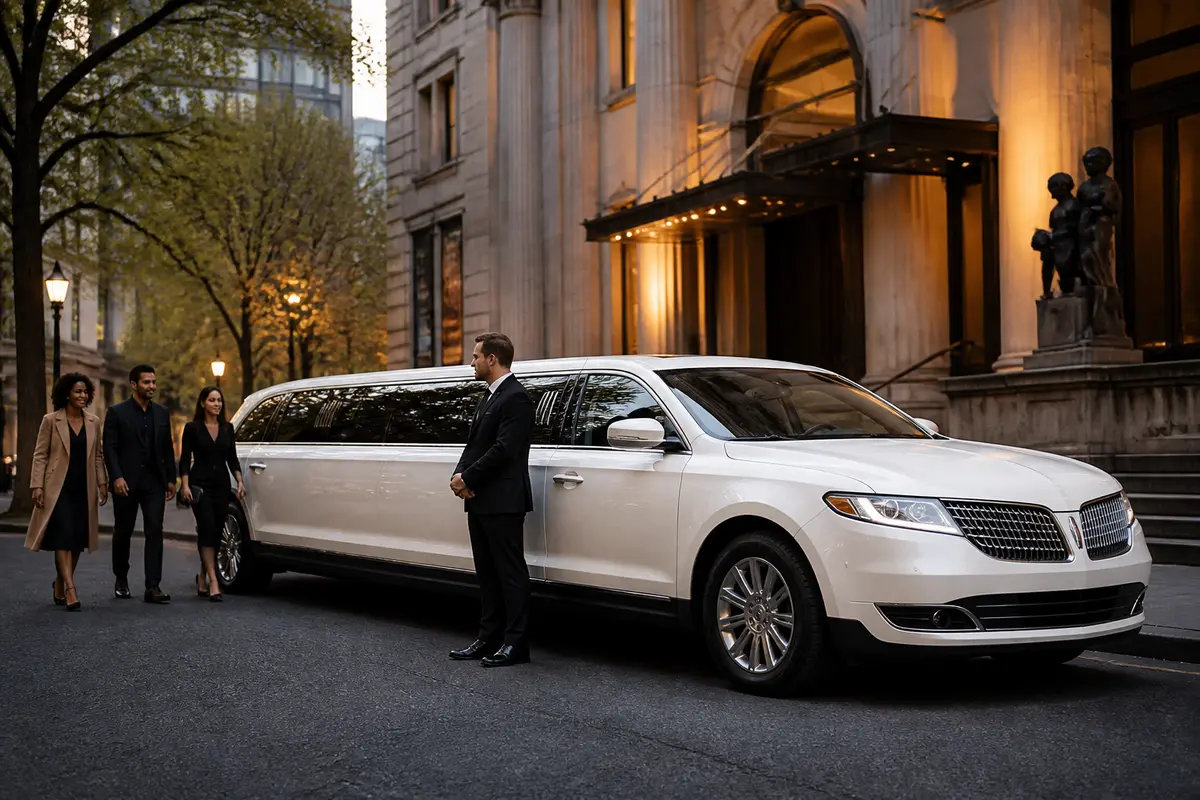
| Stretch limousine | Weddings, proms, celebrations, nights out | May range from small groups to larger parties | Bench layout, stretch length, and seat belts determine the actual limit |
| Party bus or larger group vehicle | Large celebrations and coordinated group transportation | Often designed for larger groups than a limo | Confirm seated positions, amenities, and boarding logistics |
For a close comparison of two popular choices, this guide to stretch limo versus luxury SUV options explains why cabin layout and travel purpose matter as much as the number of riders. A luxury SUV limo capacity figure may look appealing on paper, but bulky luggage or a full third row can make a different vehicle the wiser choice.
Stretch limousine capacity: smaller and larger configurations
When people ask how many people fit in a stretch limo, they often expect one standard answer. In reality, stretch limousine capacity varies widely. A smaller stretch may be intended for an intimate wedding party or a few friends, while a longer configuration may have more seating along the sides and accommodate a bigger group. The usable room depends on the actual conversion and interior design.
What changes inside a stretch limo
Stretch vehicles frequently use side-facing or wraparound bench seating rather than individual forward-facing seats. That design can create a social cabin and make it easier for people to converse, but it also means shoulder room, legroom, and entry space should be considered. A bar area, entertainment features, partition, or expanded rear storage can also change the amount of open seating.
Do not assume a longer-looking limousine automatically means more usable seats or more luggage space. Ask where bags will go, how many functioning seat belts are available, and whether the quoted number is the legal passenger capacity for that precise vehicle. These questions are particularly important for a formal event, where passengers may be in dresses, suits, or tuxedos that need extra space.

J&C LIMOUSINE SERVICE NYC | NJ
Luxury transportation for every occasion.
- Professional Chauffeur Service
- Luxury Fleet
- Airport, Corporate & Special Events
- Reliable & On-Time Service
- Serving NYC & North Jersey
Maximum capacity versus comfortable capacity
A maximum passenger limit answers, “How many people may ride?” Comfortable capacity answers, “How many people can enjoy the trip without feeling compressed?” Both answers are useful, but they are not interchangeable. For most special events, comfortable seating is the better benchmark.
At maximum occupancy, every approved seating position may be filled. That may work for a brief, direct transfer when everyone travels light. Yet a full vehicle can make it harder to enter and exit, adjust formal clothing, reach personal items, or move safely when the vehicle stops. A crowded cabin also leaves little flexibility if a passenger needs a more accessible position.
Factors that affect comfort on board
- Trip length: A short local ride usually tolerates a fuller seating arrangement better than a long-distance transfer.
- Legroom and layout: Side benches, captain’s chairs, and third-row seating create different personal-space needs.
- Movement: Stops for photos, multiple pickups, and frequent entry or exit call for more open room.
- Clothing: Wedding gowns, formalwear, winter coats, and costumes can take up more space than everyday clothing.
- Passenger mix: Children, older adults, and guests with mobility needs may benefit from easier access and less crowding.
For six to eight riders, a large SUV, a suitable stretch limousine, or another group vehicle could be appropriate depending on the luggage and duration. Rather than choosing by headcount alone, explain the full plan when you contact the provider. This is especially helpful when arranging Manhattan travel, where timing, curb access, and multiple stops can affect the ideal fleet selection.
Why luggage and special requirements reduce practical capacity
Passenger numbers are only one part of the vehicle-sizing decision. Luggage space can be the deciding factor for airport transportation. Several passengers with rolling suitcases, garment bags, carry-ons, and personal items may require a larger cargo area or a vehicle with fewer occupants. A stretch limousine can offer a spacious passenger cabin yet have limited space for a full group’s bags.
Plan for more than suitcases. Coats may need to remain with passengers during cold-weather travel. Refreshments, flowers, signs, musical instruments, photography equipment, strollers, or event supplies can take up valuable interior or cargo room. Never place items where they interfere with seat belts, safe entry and exit, or emergency access.
Accessibility and child-safety planning
If a passenger has mobility needs, ask about door access, step height, seating position, and whether mobility equipment can be accommodated. Be specific without assuming every vehicle can meet the same needs. For children, confirm the applicable child-restraint requirements and whether the family will bring a suitable child seat. The safest option may carry fewer people than the stated maximum once equipment and access needs are considered.
Safety checks deserve the same attention as interior comfort. For New York bookings, review New York’s limousine safety checklist, which advises passengers to check operating authority, insurance, the driver’s commercial credentials, inspection status, emergency exits, safety equipment, and working seat belts. Every passenger should have an appropriate seat belt available and wear it throughout the ride.
A step-by-step limo size guide for choosing the right vehicle
A simple planning process prevents most capacity surprises. Give the transportation provider useful details early, then ask for a recommendation based on the exact vehicle rather than a broad category name.
- Count every passenger. Include children, wedding-party members, and anyone joining at a later pickup. Avoid leaving “maybe” guests out of the initial conversation.
- List luggage and items. Note the number and approximate size of suitcases, plus coats, child seats, mobility devices, and event equipment.
- Define the trip. Specify travel distance, estimated ride time, number of stops, pickup sequence, and whether the group will be in formal attire.
- Set comfort and accessibility priorities. Decide whether extra room, easy entry, luggage capacity, or a shared social cabin matters most.
- Compare vehicle categories. Consider a sedan for a small executive trip, a luxury SUV for flexible small-group travel, a stretch limousine for a celebratory group, or a larger vehicle for a bigger party.
- Confirm the exact vehicle. Ask for its make and model, seating configuration, confirmed passenger limit, luggage guidance, and seat-belt availability in writing where possible.
For groups beginning in the boroughs, discussing the itinerary with a provider of group transportation in Queens can help match the ride to real travel conditions instead of selecting solely from a generic capacity chart.
Match the vehicle to the occasion, not just the headcount
The best limo for group size depends on what the group will do before, during, and after the ride. A vehicle that is ideal for a short celebration may not suit a baggage-heavy transfer. Consider the occasion as part of your limousine capacity calculation.
Weddings and family celebrations
Wedding transportation often involves formal clothing, bouquets, photo stops, and passengers entering or exiting together. Leave room for gowns and personal items, and consider whether the couple, wedding party, or family members should travel separately. For family events, account for child seats, older relatives, and convenient entry rather than trying to fill every possible seat.
Proms, concerts, and nights out
For prom transportation, confirm the passenger list, supervision expectations, pickup order, and seat belts well ahead of time. Concerts and nights out may involve changing pickup locations, crowded curbs, and a desire to stay together. A suitably sized shared vehicle can simplify the return trip, but a very full cabin may be less enjoyable after several hours out. See considerations for night out transportation when mapping stops and selecting the right level of space.
Airport and corporate transportation require a different calculation
Airport transportation should start with baggage, then passenger count. A group of four travelling with only personal bags may fit comfortably in a vehicle that would not be practical for four people with large checked suitcases. Mention flight times, terminal, luggage quantity, and any oversized items when requesting a recommendation. This allows the operator to assess cargo space as well as seating capacity.
For corporate transportation, comfort can support a more productive, polished trip. Colleagues may need space for laptops, briefcases, presentation materials, and conversation. A smaller group may therefore choose a larger vehicle than the maximum-passenger figure suggests. If the trip involves clients, multiple hotel pickups, or a longer route, prioritize a calm, unhurried cabin and dependable boarding logistics.
Service geography can shape the plan, too. A pickup or event in Montclair may call for a different timing and vehicle approach than a dense urban itinerary or an airport run. Share the complete route so the provider can advise on practical access, not merely seats.
Review the fleet before making assumptions
Fleet labels can be useful starting points, but photographs and category names cannot confirm the precise limousine passenger capacity for your booking. Reviewing the available vehicle options in the J&C Limousine fleet can help you understand the types of transportation that may be relevant to your event. Then contact the company to verify what is available for your date and the exact seating and luggage details for the quoted vehicle.
This approach also prevents confusion between a limo service and a black car service. A black car or luxury sedan may be an excellent choice for one or two business travelers, while a stretch vehicle or SUV may better suit a celebratory group. The practical distinctions in limo service versus black car service can help you frame the right questions before requesting a quote.
Questions to ask before booking a limousine
Clear questions protect both comfort and safety. Use this checklist when comparing providers or confirming a reservation:
- What is the exact vehicle make, model, and interior seating configuration?
- What is its confirmed legal passenger capacity, and what number do you recommend for our trip?
- How much luggage can it accommodate with our party size and bag types?
- How many working seat belts are available, and does every passenger have an appropriate seating position?
- Are there any accessibility considerations, step-up requirements, or limitations relevant to our group?
- Can the vehicle safely accommodate our child seat, mobility device, coats, flowers, or other equipment?
- What happens if the assigned vehicle is unavailable? Is a substitution possible, and how would its capacity compare?
- Is the quoted vehicle category guaranteed, or will the exact vehicle be confirmed closer to service?
- Where can the chauffeur safely pick up and drop off the group, especially at hotels, venues, airports, or busy streets?
- What pickup time allows for traffic, parking, boarding, and the event schedule?
For a group that needs local coordination, a conversation with a Queens transportation provider should cover these operational details along with vehicle capacity. The goal is to arrive with the right amount of room—not to maximize the number of people in one cabin.
Frequently asked questions
How many passengers can fit in a limo?
It depends on the vehicle. A luxury sedan often serves a small party, luxury SUVs can suit small-to-medium groups, and stretch limousines or party buses may carry more. Confirm the actual passenger limit for the specific vehicle you are booking.
How many people fit in a stretch limo?
Stretch limousine capacity varies by the vehicle’s length, seating layout, approved positions, and seat-belt configuration. Smaller and larger stretch models are not interchangeable, so ask for the confirmed capacity of the exact vehicle.
Does luggage reduce limousine capacity?
Yes. Large suitcases, carry-ons, garment bags, strollers, and event items can reduce the practical number of passengers. This is particularly important for airport trips and longer journeys.
Should we book to the maximum seating capacity?
Usually, not unless it is a brief, light-luggage trip and the provider confirms it is appropriate. Booking below the maximum can provide better legroom, easier entry, room for formal clothing, and a more relaxed experience.
What is the best option for six to eight passengers?
A suitable luxury SUV, stretch limousine, or larger group vehicle may work, depending on luggage, route, trip duration, and desired comfort. Ask the provider to compare the specific options available for your date.
Do longer trips need a larger limousine?
Often, yes. Longer rides make legroom, personal space, restroom-stop planning, luggage, and comfortable seating more important. A vehicle that works at maximum occupancy for a short transfer may feel crowded for an extended trip.
How can I confirm the capacity before booking?
Provide the passenger count, luggage list, itinerary, and special requirements, then request the exact vehicle details, legal passenger limit, recommended occupancy, and seat-belt information from the transportation provider.
Choose capacity with safety and comfort in mind
So, how many people can fit in a limousine? The reliable answer is: as many as the specific vehicle is approved to carry, but ideally fewer than that maximum when luggage, travel time, comfort, or special needs call for more space. A sedan, luxury SUV, stretch limousine, and party bus each solve different transportation needs.
Start with the whole picture: passenger count, bags, attire, accessibility, route, and occasion. Review the fleet, ask direct questions, and confirm the exact vehicle before finalizing the booking. That careful approach helps your group travel safely, use seat belts properly, and enjoy a ride that feels appropriately spacious from pickup through drop-off.
Ready To Book Your Next Luxury Limousine Ride?
Airport Transfers – Corporate Travel – Special Events
Travel in comfort and style with J&C Limousine. From airport transfers to special events, we provide reliable, professional transportation for a smooth and comfortable journey.