
How to Plan Wedding Day Transportation in New York City
Explore How to Plan Wedding Day Transportation in New York City with J&C Limousine for practical guidance and a polished ride experience for your celebration.
Knowing how to plan wedding day transportation in New York City can make the difference between a schedule that feels supported and one that leaves people waiting, calling for directions, or arriving rushed. A wedding day may involve a getting-ready location, hotel pickups, a ceremony venue, photo stops, a reception, and a late-night return plan—all while different groups move on different schedules. J&C Limousine helps couples organize the vehicle, passenger, and itinerary details that give a New York City wedding transportation plan a clearer structure.
The goal is not to predict every street condition. It is to build a practical plan with confirmed information, reasonable flexibility, and one reliable version of the schedule that the couple, planner, venues, and transportation provider can use.
Why wedding transportation belongs in the main wedding-day plan
Transportation is often treated as a final booking task, but it affects much more than the ride itself. It influences when hair and makeup must finish, when the wedding party leaves, whether photographs have enough breathing room, how guests find the venue, and whether the reception begins with the right people present.
In NYC, a plan can become complicated quickly when passenger groups start from different hotels, a ceremony and reception are in separate neighborhoods, or a venue has specific arrival procedures. Without a coordinated wedding transportation schedule, small gaps in information can lead to guest confusion, an overcrowded vehicle, missed pickup windows, or unnecessary vehicle costs.
Putting transportation into the main day-of timeline helps you make decisions early: who rides together, which movements require a vehicle, where each pickup happens, and who can answer questions if plans shift. Couples considering a wedding limousine service in New York City can use this planning process to discuss the right itinerary rather than booking a vehicle before the actual transportation needs are clear.
Build a complete transportation brief before booking
A transportation brief is a working document that turns a collection of wedding details into usable instructions. It does not need to be elaborate, but it should be complete enough for you and your provider to identify gaps before the wedding week. Start it before requesting quotes so the vehicle recommendations and service window reflect the day you are actually planning.
List everyone who needs transportation
Begin with people, not vehicles. Make separate lists for the couple, wedding party, immediate family, guests needing a shuttle or group ride, and anyone who may need return transportation. Then note whether each person truly needs a ride or simply needs clear arrival instructions.
- Couple: departure from the getting-ready location, ceremony arrival, photo movements, reception arrival, and end-of-night departure.
- Wedding party: whether everyone begins at one address or requires multiple pickups, plus attire and personal items that affect usable space.
- Family and VIPs: guests who should travel together, need extra assistance, or must arrive well before the ceremony.
- Guests: out-of-town groups, hotel-based attendees, or people traveling between ceremony and reception venues.
Passenger count should reflect actual seats needed for each movement, not simply the total guest count. A vehicle that works for the bridal party may not be the right choice for parents, luggage, flowers, or a separate guest group. This is the starting point for answering the common question, “How many wedding vehicles do I need?”
Map every location and movement
Write each address exactly as it should appear in the itinerary. Include the getting-ready location, hotel pickup points, ceremony venue, reception venue, planned photo locations, and any after-party or return destinations. Next, list every trip in order. For example, the wedding party may travel from a hotel to the ceremony while the couple takes a separate route from a private getting-ready location.
For each stop, note the desired arrival time, the group traveling, and what happens next. This makes ceremony to reception transportation in NYC easier to evaluate because the provider can see whether vehicles need to wait, make another pickup, or complete separate movements. It also prevents the assumption that one vehicle is automatically available for every group throughout the day.
Confirm the information a provider will need
A transportation provider needs more than venue names to help shape a workable plan. Share the wedding date, passenger counts by trip, complete locations, target arrival times, the desired vehicle style, and the person authorized to make day-of decisions. Mention mobility needs, luggage, garment bags, floral arrangements, car seats if applicable, and any schedule point that cannot move.
It is also helpful to identify who is responsible for confirming final details. A planner, family member, or trusted wedding-party member can serve as the transportation coordinator so the couple is not fielding logistics questions during preparations. Once the brief is ready, you can request a wedding transportation quote based on meaningful itinerary details rather than an incomplete estimate.

J&C LIMOUSINE SERVICE NYC | NJ
Luxury transportation for every occasion.
- Professional Chauffeur Service
- Luxury Fleet
- Airport, Corporate & Special Events
- Reliable & On-Time Service
- Serving NYC & North Jersey
Create a realistic NYC wedding transportation timeline
A strong wedding day transportation timeline starts with required arrival times and works backward. It should distinguish between the time a group arrives at a venue and the earlier time it needs to be ready to board. Those are not the same thing, particularly when formal attire, personal belongings, multiple pickups, or venue access are involved.
Work backward from ceremony and reception arrival times
Start with the ceremony start time and decide when the couple, wedding party, close family, and guests should be at the venue. Some groups may need to arrive earlier for photographs, setup, or a private moment. From there, identify the departure point for each group and the sequence of trips.
Repeat the exercise for the reception. Account for any portrait session, receiving line, venue transition, or separate guest movement between the ceremony and reception. A timeline should make clear whether the wedding party travels together, whether guests need a shuttle, and whether the couple’s vehicle is reserved for a later departure. This approach helps avoid a plan that looks workable on paper but leaves no time to load or regroup.
Allow for pickup, loading, traffic, and buffer time
Travel time is only one part of a wedding transportation plan. People need time to gather at the correct meeting point, board carefully in formalwear, load permitted items, and exit at the destination. NYC traffic, street activity, weather, and curb access can also affect the day, so build buffer time around important arrivals rather than relying on a tightly timed sequence.
Confirm practical pickup and drop-off points with each venue or hotel. A front entrance may not always be the most workable place for a vehicle to wait or load passengers. The New York City Department of Transportation’s NYC loading zone guidance explains that designated curb areas can support passenger pickup and drop-off, including hotel guest loading with baggage, while posted signs and meter rules still need to be followed. Treat curb arrangements as location-specific: do not assume a vehicle can wait, double-park, or use a particular curb without confirmation.
Instead of choosing a universal number of extra minutes, ask your planner, venues, and transportation provider where the realistic pressure points are. The key is to protect essential moments—ceremony arrival, photo time, and reception entrance—with a sensible buffer.
Coordinate transportation with the planner, venues, and photographer
The transportation schedule should support the master wedding timeline, not exist separately from it. Give the planner the final itinerary, ask venues about arrival and loading procedures, and tell the photographer which travel segments affect portraits. If photo locations are included, make sure they are entered as actual stops with a clear sequence, not informal ideas added on the day.
A professional chauffeur should receive the final pickup names, locations, timing, and day-of contact, while the transportation coordinator receives the provider’s confirmed instructions. This two-way communication reduces the chance that a last-minute route change or a delayed group becomes a problem nobody owns.
Choose the right number and type of vehicles
Vehicle selection should follow the movement plan. A single luxury vehicle may suit the couple but not a large wedding party; multiple vehicles may improve coordination for groups departing from different locations. Conversely, adding vehicles without a defined purpose can create unnecessary cost and more people to manage.
Match vehicles to passengers and movements
For each trip, compare the passenger count with the usable capacity needed once attire, bags, flowers, and comfort are considered. Also consider whether the same vehicle is expected to complete another movement before it is needed again. Separating the day into individual trips makes the decision more precise.
| Transportation need | Planning question | Potential approach |
|---|---|---|
| Couple’s arrival and departure | Will the couple need privacy, photo time, or a later exit? | Reserve a dedicated vehicle around those key movements. |
| Wedding party travel | Does the group start and end at the same locations? | Choose capacity based on the actual group and belongings. |
| Family or VIP movement | Do they need an earlier arrival or accessible pickup? | Plan a separate, clearly timed trip where useful. |
| Guest transportation | Are many guests traveling from one hotel to one venue? | Set defined pickup windows and a named meeting point. |
For a deeper trip-by-trip way to assess the count, review how many wedding limousines you may need. The best answer depends on passenger groups, overlapping movements, venue locations, and whether vehicles must stay available between events.
Compare stretch limousine and luxury SUV considerations
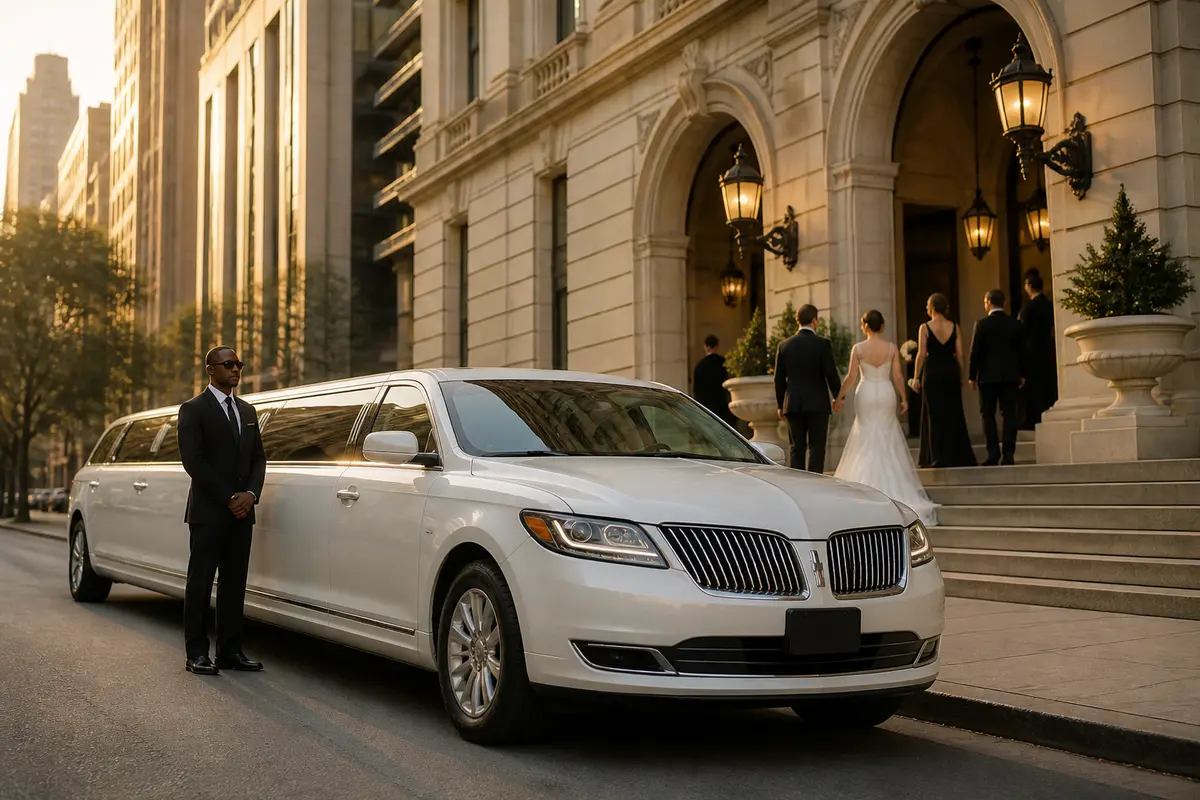
A stretch limousine and a luxury SUV can serve different wedding-day priorities. A stretch limousine may suit couples who want a traditional wedding arrival and shared seating for a selected group. A luxury SUV may be a practical fit for a smaller group, a different passenger configuration, or an itinerary where a more compact vehicle format is preferred. Neither is automatically right for every trip.
Consider door access, passenger comfort in formal attire, the number of people traveling, personal items, and whether the vehicle is intended for the couple or a group. This comparison of stretch limo versus a luxury SUV can help frame the discussion before you decide. J&C Limousine can then review the actual schedule and help connect vehicle formats to the movements that matter most.
When evaluating NYC wedding limo options, ask how each vehicle fits the itinerary as a whole—not just how it looks in an arrival photo.
Coordinate transportation across New York City locations
Wedding transportation logistics become more sensitive when the day crosses several locations. The goal is not to create an overly complicated route plan; it is to give every group a clear starting point, destination, contact, and timing expectation. Each additional hotel, photo stop, or separate pickup should have a reason and an owner.
Plan multiple pickups, hotels, and venue access
Multiple pickups can be appropriate, but they should be planned deliberately. Confirm the hotel entrance or meeting point, identify whether guests should be ready before the stated pickup window, and provide a phone contact for questions. For venues, ask where a chauffeur should approach, where passengers should exit, and whether the venue has loading or security instructions.
Share those details in writing rather than relying on a verbal description. If a group is meeting at a hotel, specify a lobby, entrance, or curbside point that guests can recognize. If people are being picked up from homes or different getting-ready locations, confirm the order and identify who will be ready first. These details reduce avoidable waiting and help keep the wedding party from feeling rushed.
Consider Brooklyn, Manhattan, and other itinerary locations without creating an area guide
New York City wedding transportation may involve a Manhattan hotel, a ceremony in Brooklyn, photos elsewhere, and a separate reception location. The important planning question is how those exact movements connect, not which borough is “best.” Enter every confirmed address into the transportation brief, review the sequence with the planner, and avoid adding a stop simply because it seems nearby on a map.
For weddings with a related movement beyond the city, such as an event segment or guest arrangement involving Morristown, treat it as a distinct itinerary requirement. Confirm the date, passenger group, direction of travel, and service timing rather than folding it vaguely into the NYC schedule.
Establish one confirmed itinerary and a day-of contact
Several versions of a timeline create confusion. Before the wedding, issue one final itinerary with passenger groups, pickup windows, addresses, venue access notes, vehicle assignments, and key phone contacts. Send the applicable portion to each group; guests do not necessarily need every detail of the wedding party’s schedule.
Choose one transportation coordinator who can communicate with the chauffeur or provider if a question arises. The coordinator should know who can approve a schedule change, where the couple is likely to be, and how to reach the planner. This gives the couple space to focus on the wedding rather than managing calls about a missed meeting point.
Know when to book and what to confirm
Wedding limo booking in NYC is easier when the date and core itinerary are sufficiently defined. Booking too early without basic locations and passenger counts can make it harder to choose the right service setup; waiting until the plan is nearly final may reduce flexibility for a particular vehicle format or schedule. Start the conversation once you know the date, major venues, likely passenger groups, and approximate service window, then refine details as they are confirmed.
Consider booking timing and date availability without making unsupported claims
There is no single booking timeline that suits every wedding. Date demand, vehicle needs, group size, itinerary complexity, and changes to venue arrangements all matter. The useful step is to ask about the planning process early enough to compare options calmly, then provide updates promptly as your wedding details become firm. For additional decision factors, see how far in advance to book a wedding limo in NYC.
Use a final confirmation checklist
In the days before the wedding, review the transportation plan with the relevant people. Confirm:
- All pickup and destination addresses, including the correct venue entrance.
- Passenger counts for each individual movement.
- Vehicle assignments and the planned service sequence.
- Target arrival times, pickup windows, and protected buffer time.
- Hotel, venue, and curbside loading instructions.
- The day-of transportation coordinator and backup contact.
- Special needs involving accessibility, attire, personal items, or weather.
- Whether return transportation is arranged and who is using it.
Keep the final version simple enough to use under pressure. If an item is unclear, resolve it before the day instead of leaving it for a guest, family member, or chauffeur to interpret.
Make the plan easy for guests and the wedding party to follow
Even a well-built schedule can fail if the people using it do not understand where to be. Communication should be specific, brief, and sent early enough for guests to plan. The most useful instructions answer four questions: where do I meet, when should I be ready, who am I traveling with, and whom do I contact if I am delayed?
Communicate pickup instructions and meeting points
For wedding transportation for guests in NYC, send a concise message that includes the address, a recognizable meeting point, the pickup window, and a reminder that the vehicle must leave according to the schedule. Include a day-of contact rather than asking guests to call the couple. If there are multiple hotel pickups, label each group clearly so nobody assumes every vehicle stops at every hotel.
Wedding-party instructions can be more detailed. Include what must travel with them, whether they should bring belongings downstairs before pickup, and the next destination after the ride. This is especially important when the group is changing locations between getting ready, the ceremony, and photographs.
Account for attire, accessibility, weather, personal items, and return transportation
Formal clothing, umbrellas, garment bags, bouquets, mobility devices, and overnight bags all affect boarding and vehicle space. Mention these needs when developing the transportation brief rather than treating them as minor day-of details. If weather may affect an outdoor walk, entrance, or photo stop, discuss a contingency with the planner and venue. A weather contingency does not need to solve every possibility; it should identify the decision-maker and the alternate instruction.
Return transportation also deserves a clear plan. Decide whether selected guests need a scheduled departure, whether the couple has a separate exit vehicle, and where guests should wait at the end of the reception. A clear return plan can be particularly helpful when guests are unfamiliar with the area or are wearing formal attire late at night.
Final planning checklist and next step
The most effective way to plan wedding day transportation in New York City is to turn the wedding into a sequence of confirmed movements: who is traveling, from where, to where, by when, and with which point of contact. Start with passenger groups and locations, work backward from arrivals, select vehicles based on actual trips, verify hotel and venue access, and distribute one final itinerary that people can follow.
Do not aim for a schedule so tight that one small delay disrupts the entire day. Build room around the moments that matter, make responsibility clear, and revisit the plan as venue and guest details become final. When you are ready to discuss your passenger list, vehicle preferences, and wedding day transportation timeline, J&C Limousine can help you organize those details into a transportation plan that supports the celebration.
Customer Reviews & Testimonials
Based on 256 reviews

 Trustindex verifies that the original source of the review is Google.
 Trustindex verifies that the original source of the review is Google.
 Trustindex verifies that the original source of the review is Google.
 Trustindex verifies that the original source of the review is Google.
 Trustindex verifies that the original source of the review is Google.
 Trustindex verifies that the original source of the review is Google.
 Trustindex verifies that the original source of the review is Google.
 Trustindex verifies that the original source of the review is Google.
 Trustindex verifies that the original source of the review is Google.

Contact Us
Ready To Book Your Next Luxury Limousine Ride?
Airport Transfers – Corporate Travel – Special Events
Travel in comfort and style with J&C Limousine. From airport transfers to special events, we provide reliable, professional transportation for a smooth and comfortable journey.